A plumbing problem can quickly turn from a minor inconvenience into expensive damage. A burst pipe, overflowing toilet, major leak or blocked wastewater line can affect flooring, cabinetry, walls and other parts of the home if the problem is not addressed promptly.
Knowing which situations require emergency plumbing repairs in Sydney can help homeowners respond appropriately and reduce the risk of further property damage.
Some plumbing problems can wait for a scheduled repair. Others need prompt attention from an appropriately licensed plumber. Here are some of the most common urgent plumbing problems Sydney homeowners should recognise.
What Is Considered a Plumbing Emergency?
A plumbing problem generally becomes urgent when it is causing significant water loss, creating a potential health or safety issue, preventing an essential plumbing fixture from being used or causing ongoing damage to the property.
Examples can include:
- Burst water pipes
- Major uncontrolled leaks
- Blocked or overflowing toilets
- Wastewater overflows
- Serious drainage blockages
- Loss of water supply caused by a property plumbing problem
- Significant leaks affecting walls, floors or ceilings
- Plumbing damage that could cause further property damage if left unattended
NSW legislation specifically recognises emergency plumbing and drainage work in circumstances including preventing water waste, restoring a water supply, freeing a choked pipe, protecting public health or safety and preventing property damage.
1. Burst Water Pipes
A burst pipe is one of the clearest examples of a plumbing emergency.
Water can spread quickly through flooring, cabinetry, walls and ceilings, potentially damaging finishes and belongings in a short period of time.
If you discover a major leak from your property’s pipework, stopping the flow of water where it can be done safely can help limit further damage while professional assistance is arranged.
Sydney Water advises that when a leak is within private property pipework between the water meter and the building, a licensed plumber is generally required.
2. Major Water Leaks
Not every leak starts with a dramatic burst pipe.
Some begin around plumbing fittings, flexible hoses, toilets, basins, showers or connections and gradually become more serious.
Warning signs can include:
- Water pooling unexpectedly
- Continuous dripping or flowing water
- Wet cabinetry
- Swollen skirting boards
- Water stains on walls or ceilings
- Paint bubbling or peeling
- Unexplained damp areas
- A sudden change in water usage
A leak that is actively damaging the property should be investigated promptly rather than waiting for the visible damage to become more extensive.
3. Overflowing or Blocked Toilets
A toilet that will not flush properly can be inconvenient. A toilet that is overflowing or causing wastewater to back up can require much more urgent attention.
Repeated flushing can make an overflow worse, so avoid continuing to operate the toilet when there is an obvious blockage.
A blockage may be limited to the toilet itself or may indicate a problem further within the drainage system.
Where wastewater is overflowing, appropriate hygiene precautions are also important because wastewater can present a health risk.
4. Wastewater Backups
A wastewater backup should not be treated like an ordinary slow drain.
Possible signs include:
- Wastewater coming back through a toilet or drain
- Multiple fixtures draining poorly at the same time
- Gurgling from drains
- Strong wastewater odours
- Overflowing wastewater outside the home
Sydney Water advises that if a wastewater overflow occurs only while you are using services on your property, particularly where only some services are affected, a licensed plumber should assess the problem as soon as possible.
If the source is outside the property, or you are unsure whether it relates to Sydney Water infrastructure, Sydney Water can help determine where the fault is located.
5. Severely Blocked Drains
A single slow basin or shower drain may not necessarily be an emergency, but a serious blockage affecting multiple fixtures can indicate a larger drainage problem.
For example, water rising in one fixture when another fixture is used can suggest that wastewater is not moving through the drainage system as intended.
Repeatedly treating a serious blockage with household drain products may not address the underlying cause.
A plumber can investigate the drainage system and determine what is causing the obstruction.
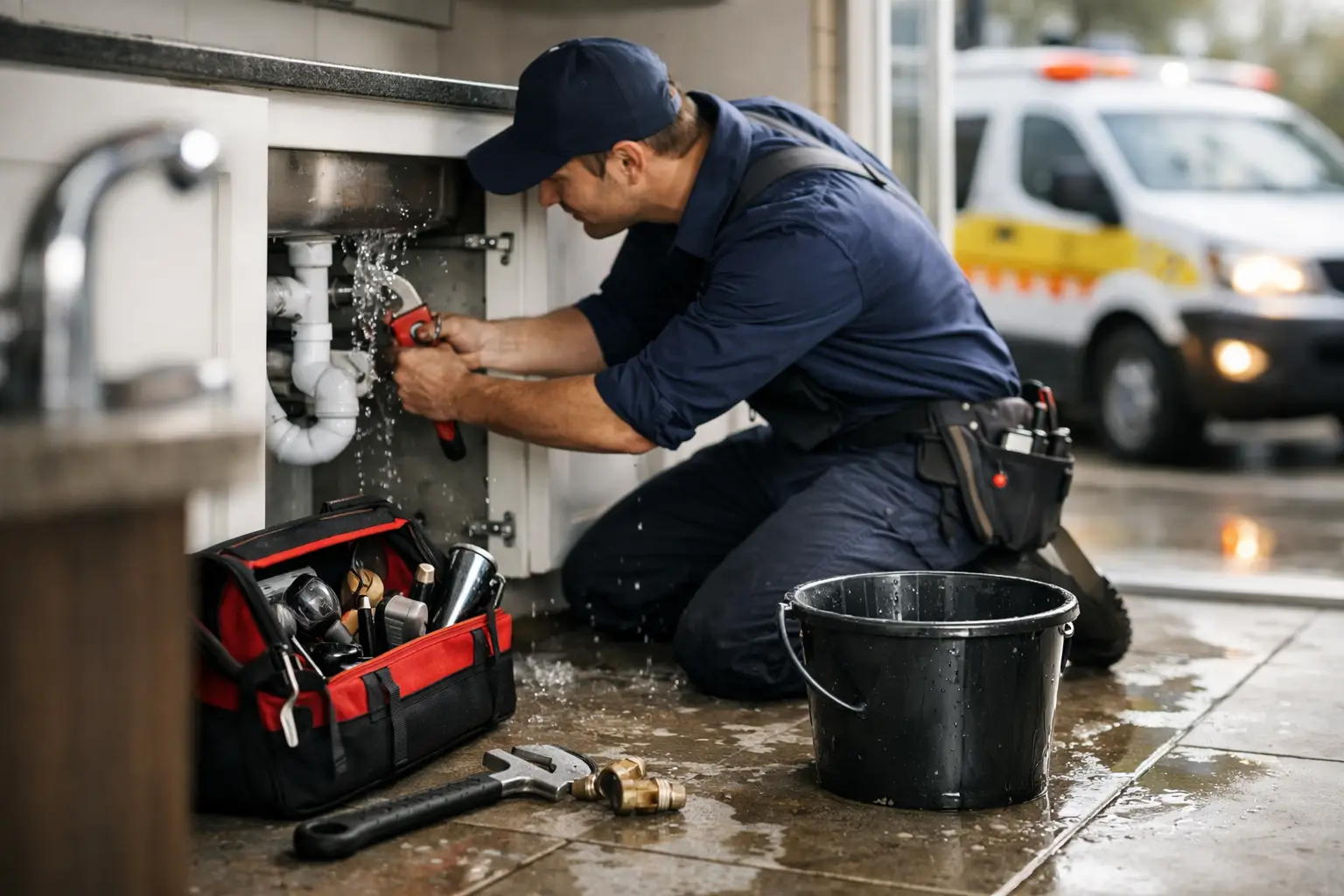
6. Leaking Plumbing Beneath a Sink
Under-sink plumbing is often hidden behind cabinetry, which means leaks can continue unnoticed.
A failed connection, damaged pipe, leaking waste fitting or water supply problem can expose cabinetry and flooring to significant moisture.
Check under kitchen and bathroom sinks occasionally for:
- Dampness
- Water staining
- Swollen cabinetry
- Musty odours
- Corrosion around fittings
- Active dripping
Early attention can sometimes prevent a small plumbing problem from turning into a much larger cabinetry or flooring repair.
7. Leaks Behind Walls or Ceilings
Hidden plumbing leaks can be difficult to identify because the water may travel before becoming visible.
Signs can include:
- Discoloured ceilings
- Paint bubbling
- Soft plasterboard
- Persistent damp smells
- Unexpected mould growth
- Water appearing away from an obvious plumbing fixture
These symptoms should be investigated rather than simply painted over. Repairing the visible surface without addressing the source of moisture can allow the problem to continue.
8. Shower and Bathroom Leaks
Bathrooms contain multiple possible sources of moisture, so determining the cause of a leak is important.
The problem could relate to plumbing fittings, drainage, seals, shower components or other parts of the wet area.
Possible signs include water appearing outside the shower, dampness in an adjoining room, damaged skirting, swollen cabinetry or staining on the ceiling below an upstairs bathroom.
Persistent bathroom moisture should be properly assessed before cosmetic repairs are made.
9. Kitchen Plumbing Problems
Modern kitchens can contain numerous water connections, including sinks, taps, dishwashers, refrigerators and other appliances.
A failed connection or damaged hose can release a significant amount of water into cabinetry and flooring.
Kitchen renovations provide a useful opportunity to assess the condition and layout of plumbing fittings before new cabinetry and benchtops make those areas more difficult to access.
10. Hot Water Plumbing Leaks
Leaks around a hot water system or associated pipework should be taken seriously.
Besides water damage, hot water can create an additional burn risk.
Avoid attempting to dismantle or repair the system yourself. The appropriate licensed trade should inspect the problem and determine what work is required.
What Should You Do When a Pipe Bursts?
The priority is to reduce further damage without putting yourself at risk.
Depending on the situation, appropriate immediate actions may include:
- Stop using the affected plumbing fixture.
- If you know how to safely isolate the relevant water supply, do so.
- Keep people away from areas where water may be interacting with electrical equipment.
- Move belongings away from spreading water where this can be done safely.
- Contact an appropriately licensed plumber.
If water is near electrical equipment, outlets, appliances or wiring, avoid touching electrical equipment in the affected area and seek appropriate professional assistance.
Is the Leak Your Responsibility or Sydney Water’s?
Not every burst or leaking pipe around a property is necessarily part of the homeowner’s private plumbing system.
Sydney Water explains that if a leak is in pipes between the water meter and your building, you generally need a licensed plumber.
A leaking water meter or meter tap, or certain faults between the water meter and the street, may instead fall within Sydney Water’s responsibility.
If you cannot determine whether a serious fault is within your private plumbing or the water network, Sydney Water can assist with identifying where the problem is located.
When Should You Call Sydney Water?
Problems involving public water infrastructure or wastewater systems may need to be reported directly to Sydney Water.
This can include urgent leaks or unusual amounts of water in public spaces, wastewater overflows outside the property, or situations where it is unclear whether the fault is within private plumbing or Sydney Water’s network.
For faults and emergencies involving its network, Sydney Water operates a 24-hour faults service.
Why You Should Avoid DIY Plumbing Repairs
An emergency can make a quick DIY repair tempting, but plumbing and drainage work in NSW is regulated.
NSW Government guidance states that the appropriate licence or certificate is required to perform plumbing, draining or gasfitting work, regardless of the value of the work.
A homeowner can take reasonable steps to reduce immediate damage, such as stopping the use of an affected fixture or isolating water where they already know how to do so safely, but regulated plumbing repairs should be left to appropriately licensed professionals.
How Can You Reduce the Risk of Plumbing Emergencies?
Not every plumbing failure can be predicted, but regular attention to warning signs can help identify some problems earlier.
Homeowners can:
- Investigate recurring leaks instead of ignoring them
- Check under sinks for moisture
- Pay attention to changes in drainage performance
- Replace damaged plumbing fittings when necessary
- Investigate unexplained water stains
- Address toilets that continually run or leak
- Have plumbing considered during major kitchen and bathroom renovations
Plumbing Should Be Planned During a Renovation
Renovations are an opportunity to think about plumbing before new finishes are installed.
During a kitchen or bathroom renovation, plumbing decisions can affect:
- Fixture positions
- Cabinetry layouts
- Sink and basin locations
- Dishwasher connections
- Shower layouts
- Toilet positioning
- Drainage
- Access for future maintenance
Coordinating plumbing with the rest of the renovation can reduce unnecessary alterations later and help create a more practical finished space.
When Plumbing Damage Leads to Renovation Work
Sometimes repairing the pipe is only the first part of recovering from a significant plumbing problem.
Water can damage cabinetry, plasterboard, flooring, skirting, paint and other building materials.
Once the source of the water has been repaired and the affected areas have been properly assessed and dried, restoration or renovation work may be required to return the space to a usable condition.
This is particularly relevant when a major leak affects an older kitchen, bathroom or other part of the home that was already being considered for renovation.
Planning Plumbing Work as Part of a Sydney Renovation?
Plumbing problems are much easier to manage when the underlying cause is addressed rather than repeatedly repairing visible damage.
RADZ Renovations coordinates plumbing and other trades as part of renovation projects across Sydney, helping homeowners plan kitchens, bathrooms and home improvements with the necessary services considered from the beginning.
Planning a renovation that involves plumbing changes? Talk to RADZ Renovations about your project and the plumbing requirements that need to be coordinated with the rest of the renovation.