Choosing between an induction and gas cooktop is an important decision when planning a kitchen renovation. Both options offer different cooking experiences, installation requirements and ongoing costs, so the right choice depends on how you cook, your existing services and the way you want your new kitchen to function.
For Sydney homeowners planning kitchen renovations, it is worth making this decision early because your cooktop choice can affect cabinetry, electrical work, gas connections, ventilation and the overall kitchen layout.
What Is an Induction Cooktop?
An induction cooktop uses electromagnetic energy to heat compatible cookware directly rather than heating the cooktop surface in the same way as a conventional electric element.
This provides fast and responsive cooking while reducing the amount of heat released into the surrounding kitchen.
Induction cooktops generally offer a smooth, modern appearance and are increasingly considered by homeowners who are renovating or moving towards an all-electric home.
What Is a Gas Cooktop?
A gas cooktop uses an open flame to heat cookware. Gas has traditionally been popular because the flame provides immediate visual feedback and allows cooks to adjust the heat quickly.
For homes that already have an appropriate gas connection, retaining gas may sometimes be straightforward. However, the condition and location of existing services still need to be considered during a renovation.
Induction vs Gas: Which Heats Faster?
Induction is known for rapid heating because energy is transferred directly to compatible cookware. This can make boiling water and changing cooking temperatures particularly quick.
Gas also responds quickly when the flame is adjusted, but some of the generated heat is lost around the sides of the cookware rather than being transferred directly into it.
Which Is More Energy Efficient?
Induction is generally the more energy-efficient option because it transfers energy directly to the cookware. The Australian Government recommends considering efficient electric alternatives when replacing older gas stovetops and notes benefits including energy efficiency and improved indoor air quality.
Energy efficiency is only one part of the decision, however. Installation requirements, household energy arrangements and the way you cook should also be considered.
Cooking Control and Performance
Both induction and gas can provide responsive temperature control.
Gas gives you a visible flame, which some cooks prefer because the heat level can be judged visually. It can also work with a broad range of cookware.
Induction provides precise electronic control and fast response without an exposed flame. Many modern induction models also include features such as timers, flexible cooking zones and automatic pan detection.
Cookware Requirements
One practical consideration with induction is cookware compatibility.
Induction requires cookware with a magnetic base. Many stainless steel and cast-iron pans work with induction, but some aluminium, copper and glass cookware will not work unless specifically designed with an induction-compatible base.
A simple way to check existing cookware is to see whether a magnet sticks firmly to the bottom. If it does, the cookware may be suitable, although the manufacturer’s specifications should still be checked.
Gas cooktops are generally compatible with a wider range of cookware materials.
Cleaning and Maintenance
Induction cooktops have a flat glass surface, making them relatively easy to wipe down after cooking. Because the cookware itself is heated directly, spills may be less likely to burn onto the surrounding surface compared with some traditional cooktops.
Gas cooktops have burners, trivets and other components that require more detailed cleaning. Spills can collect around these parts, so maintaining a gas cooktop may involve more effort.
Safety Considerations
Induction does not use an exposed flame, which can be an advantage for households concerned about open-flame cooking.
The cooking surface can still become hot from contact with heated cookware, so normal kitchen safety remains important.
Gas installations require appropriate gas connections and ventilation, while induction cooktops require an electrical supply suitable for the selected appliance. Installation work should always be carried out by appropriately licensed tradespeople.
Ventilation and Indoor Air Quality
Kitchen ventilation should be considered regardless of the cooktop you choose because cooking itself produces heat, steam, grease and odours.
Gas combustion also releases pollutants into the indoor environment, which is another reason effective ventilation is important. The Australian Government identifies improved indoor air quality as one of the benefits of replacing gas cooking with efficient electric alternatives.
Installation Requirements for Induction
Switching from gas to induction may require electrical work. The requirements depend on the selected cooktop and the capacity of the home’s existing electrical system.
A licensed electrician should assess whether the existing circuit and switchboard are suitable before installation. This is particularly important when induction is being added as part of a larger renovation involving other new electrical appliances.
If electrical upgrades are required, they can be coordinated with other electrical services during the renovation.
Installation Requirements for Gas
If the home already has a suitable gas supply near the proposed cooktop location, retaining gas may require fewer changes to existing services.
However, moving the cooktop or significantly changing the kitchen layout may require alterations to the gas connection. Any gas work should be completed by an appropriately licensed professional.
Which Option Suits a Modern Kitchen Design?
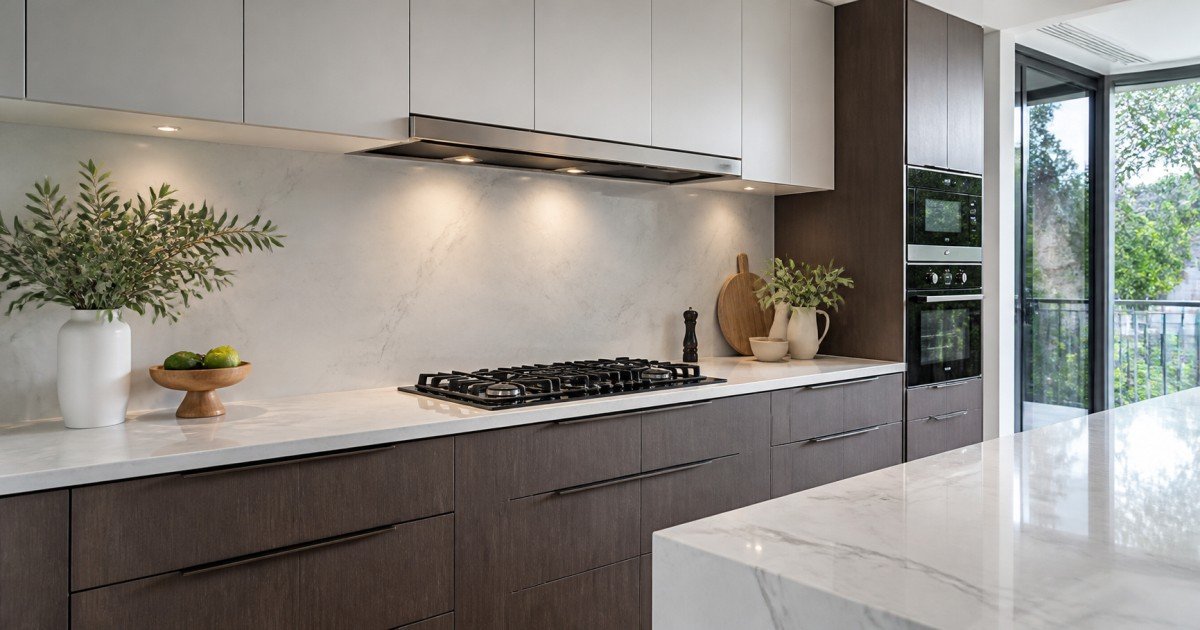
Both cooktop types can work in a contemporary kitchen, but induction offers a particularly streamlined appearance because of its flat surface.
This can work well with minimalist cabinetry and modern benchtops, particularly where homeowners want appliances to visually blend into the overall design.
Gas can provide a more traditional or professional-style appearance, depending on the selected model and surrounding finishes.
Think About the Cooktop Before Choosing Your Benchtop
The cooktop should be considered when planning the benchtop rather than selected at the last minute.
Different appliances have specific cut-out dimensions, clearances and installation requirements. These details should be confirmed before the benchtop is manufactured or installed.
If you are still comparing surfaces, our guide to durable kitchen benchtops for Sydney homes can help you consider the practical differences between popular benchtop materials.
Induction and an All-Electric Home
Induction is particularly relevant for homeowners considering an all-electric property.
Replacing gas cooking can form part of a broader electrification plan alongside electric hot water, heating and cooling. If gas is no longer required anywhere else in the property, homeowners may also be able to eliminate ongoing gas connection charges.
Which Is Better During a Kitchen Renovation?
A renovation is an ideal time to reconsider the cooktop because cabinetry, benchtops and services are already being planned.
Induction may suit homeowners who prioritise energy efficiency, easy cleaning, a streamlined appearance and an all-electric kitchen.
Gas may appeal to homeowners who prefer cooking over a visible flame, already have an appropriate gas connection or use cookware that is not suitable for induction.
There is no single choice that suits every household. The best option depends on the property, cooking preferences, budget and wider renovation plans.
Plan the Cooktop With the Rest of Your Kitchen
Your cooktop affects more than cooking. It needs to work with the cabinetry, benchtop, electrical or gas services, ventilation and surrounding appliances.
Planning these elements together as part of a complete kitchen renovation can help avoid expensive changes later in the project.
RADZ Renovations helps Sydney homeowners coordinate kitchen layouts, finishes and the different trades required to create practical and well-planned renovated spaces.
Planning a Kitchen Renovation in Sydney?
If you are deciding between induction and gas as part of a new kitchen, consider how you cook, your existing services, the appliance installation requirements and your long-term plans for the home.
Talk to RADZ Renovations about planning your Sydney kitchen renovation and coordinating the cabinetry, benchtops, electrical work and other improvements around your preferred cooktop.