
A cooktop choice affects more than the look of your new kitchen. It shapes how quickly dinner gets on the table, how easy the room is to clean, the ventilation you need and the services required behind the cabinetry. When comparing induction versus gas cooktops, the right answer comes down to your cooking habits, existing connections, budget and plans for the home.
For a kitchen renovation, it is worth making this decision early. The cooktop influences the electrical layout, gas plumbing, rangehood selection, benchtop cut-out and sometimes the type of cookware you will use. Getting these details planned properly helps avoid changes, delays and added costs once construction is underway.
Induction versus gas cooktops: the key difference
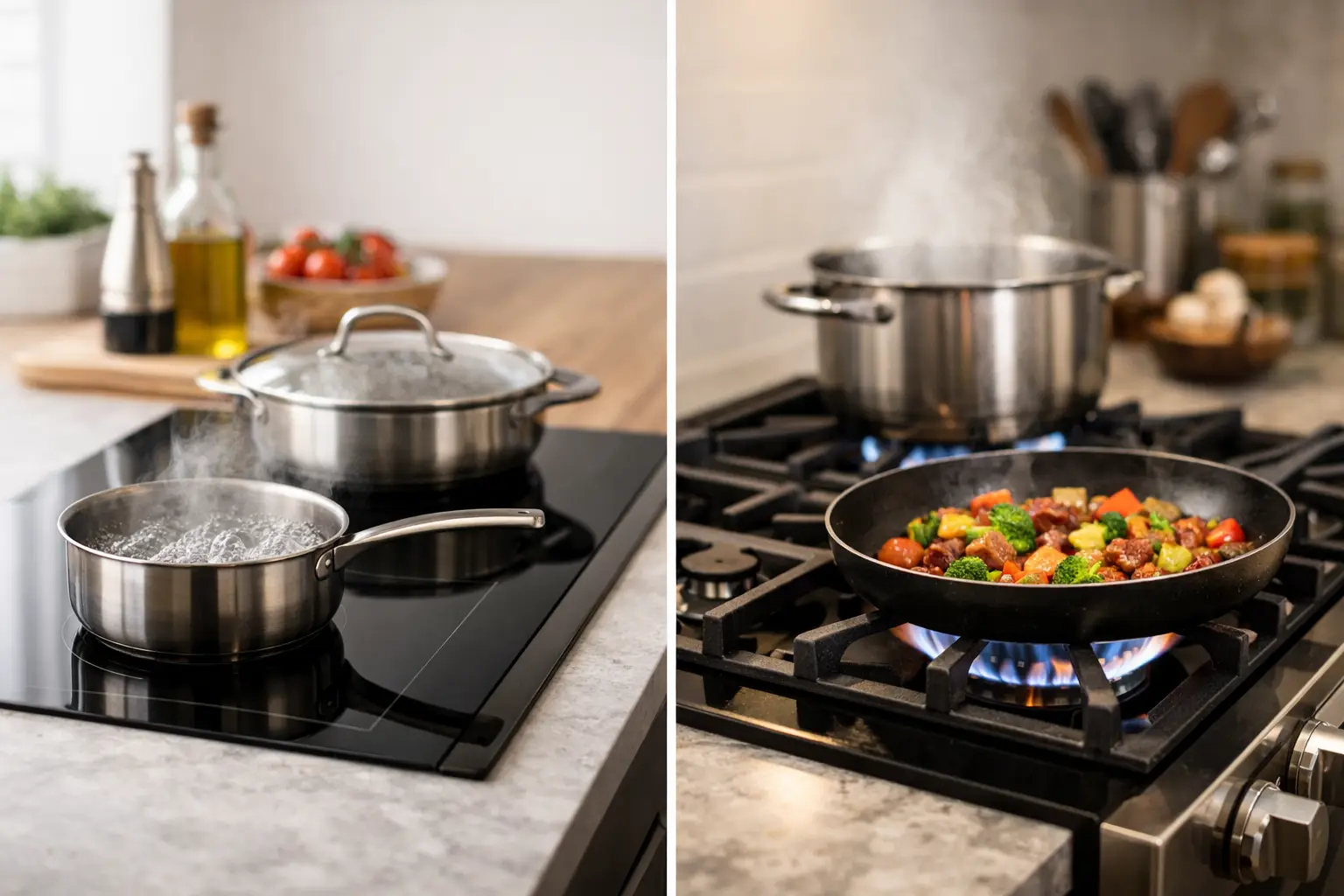
Gas cooktops create a visible flame that heats the base and sides of a pan. The response is immediate: turn the knob and the flame changes. For many confident home cooks, that direct control feels familiar and intuitive.
Induction cooktops use an electromagnetic field to heat compatible cookware directly. The glass surface itself does not generate heat in the same way as a traditional electric cooktop. The pan becomes hot, while the area around it stays comparatively cooler. This makes induction exceptionally fast and efficient, but it requires magnetic cookware and a suitable electrical supply.
Both options can produce excellent results. The better choice is not simply about which technology is newer. It is about how the kitchen will be used every day.
Why homeowners choose induction
Induction suits homeowners who want a clean, modern kitchen with fast heat-up times and less surface cleaning. Water can boil very quickly, and temperature adjustments are responsive enough for most everyday cooking, from simmering sauces to pan-frying vegetables.
The smooth glass surface is a practical advantage in busy family homes. There are no burner caps, trivets or recessed areas that collect grease. Once the cooktop has cooled, a wipe with a suitable cleaner and soft cloth is usually all that is needed. Spills are also less likely to bake onto the surface because the surrounding glass remains cooler than a gas cooktop.
Safety is another strong point. There is no open flame, which can offer extra reassurance around young children, pets and households where cooking is often interrupted. Many induction units also include pan detection, automatic shut-off functions and child locks. The cooktop can still be hot after use due to heat transferred from the pan, so care is required, but the risk profile is different to an exposed flame.
Induction can also reduce unwanted heat in the kitchen. In a compact apartment kitchen or a home that gets warm in a Sydney summer, this can make cooking more comfortable. Less heat is lost into the room, and more is directed into the cookware.
There are trade-offs. Induction cooktops require pans with a magnetic base. Cast iron and many stainless-steel pans work well, while aluminium, copper and glass cookware may not work unless they have an induction-compatible base. A simple magnet test is useful: if a magnet sticks firmly to the pan base, it should generally be suitable.
The initial cost can be higher than a basic gas cooktop, particularly when electrical upgrades are needed. Some homeowners also prefer the tactile feedback of knobs over touch controls, although induction models with knobs or easy-access controls are available.
Why gas remains a popular choice
Gas cooktops have been a kitchen staple for good reason. They are familiar, flexible and particularly popular with people who enjoy high-heat cooking, wok cooking and visual control over the flame. A gas burner works with a broad range of cookware, including rounded woks, and there is no need to replace a much-loved set of pans.
The flame is visible, which makes it easy to judge the intensity of the heat at a glance. Many cooks enjoy being able to char, toss and move pans between burners without relying on sensor controls. If your household already has natural gas connected and the existing gas line is in the right location, installation may also be more straightforward than introducing a dedicated high-load electrical circuit.
However, gas cooktops need more cleaning. Burner caps, grates and the area beneath them can collect splatters and crumbs. Keeping the burners clean is not only about appearance – blocked ports can affect flame quality and cooking performance.
Open flames also demand sensible kitchen design. Handles should be turned away from the edge of the bench, loose clothing kept clear and combustible items stored well away from the cooking zone. Good ventilation is especially important with gas, as cooking releases heat, moisture and combustion by-products into the room.
Gas performance can vary depending on the appliance, installation and maintenance. A properly fitted, quality cooktop should provide a stable blue flame. Yellow or uneven flames are a sign that it is time to have the appliance checked by a licensed gas fitter.
Installation requirements to consider before choosing
A cooktop is not a stand-alone purchase. It needs to work with the surrounding cabinetry, benchtop, ventilation and services. During kitchen planning, check the appliance specifications before finalising the design rather than assuming a replacement unit will fit the old cut-out.
For induction, the main consideration is electrical capacity. Many full-size induction cooktops need a dedicated circuit and must be installed by a licensed electrician. Older homes may need a switchboard review or electrical upgrades before the appliance can be connected safely. Allowing for this from the start is far simpler than discovering it after the cabinets and stone benchtops are in place.
For gas, the location and condition of the gas supply matter. Gas connections and alterations must be completed by a licensed gas fitter. If the cooktop is being moved to an island bench or a different wall, new pipework may be needed. In some homes, this can involve access through floors, walls or cabinetry.
Whichever option you choose, confirm these details early:
- the required benchtop cut-out and clearance around the appliance;
- the depth below the cooktop for drawers, ovens and service connections;
- the rangehood height, extraction capacity and ducting path; and
- access for future servicing, cleaning and appliance replacement.
A coordinated renovation team can plan the cabinetry, plumbing, electrical work, stone and appliance clearances together. That avoids the common frustration of a beautiful kitchen layout that does not suit the selected cooktop.
Running costs, ventilation and energy use
Induction is generally more energy efficient because it transfers heat directly into the pan. That can mean shorter cooking times and less wasted heat. Actual running costs will still depend on electricity rates, the way you cook and how often the appliance is used.
Gas can be economical where natural gas is already available, but prices and supply arrangements vary. It is wise to consider your broader household plans as well. If you are moving towards solar, battery storage or an all-electric home, induction may fit that direction better. If you rely on gas for heating, hot water and cooking, retaining gas can feel more practical in the short term.
Ventilation should not be treated as an afterthought for either option. Frying, grilling and steaming all create moisture, grease and odours. A well-sized, properly ducted rangehood helps protect cabinetry, improves indoor comfort and makes the kitchen easier to maintain. Gas kitchens benefit particularly from effective extraction, but induction kitchens need it too.
Which cooktop is best for your household?
Choose induction if you value fast boiling, easy cleaning, a sleek appearance and a cooler cooking environment. It is often an excellent match for modern family kitchens, apartments and homeowners planning a more energy-efficient renovation. Just factor in compatible cookware and potential electrical work.
Choose gas if you love cooking with a visible flame, regularly use a wok or already have a suitable gas connection in place. It remains a capable, reliable option, especially for cooks who prefer traditional controls and do not want to change their cookware.
There is also no rule that says every household should make the same choice. A landlord may prioritise durability, straightforward operation and replacement costs. A growing family may put safety and easy cleaning first. A keen home cook may care most about wok performance and control. The best kitchen is tailored to the people using it, not just the latest trend.
Before ordering your appliance, have the proposed kitchen layout, service requirements and ventilation checked as part of the renovation planning process. A well-considered cooktop choice will feel right long after the new benchtops, cabinetry and splashback have settled into daily life.