

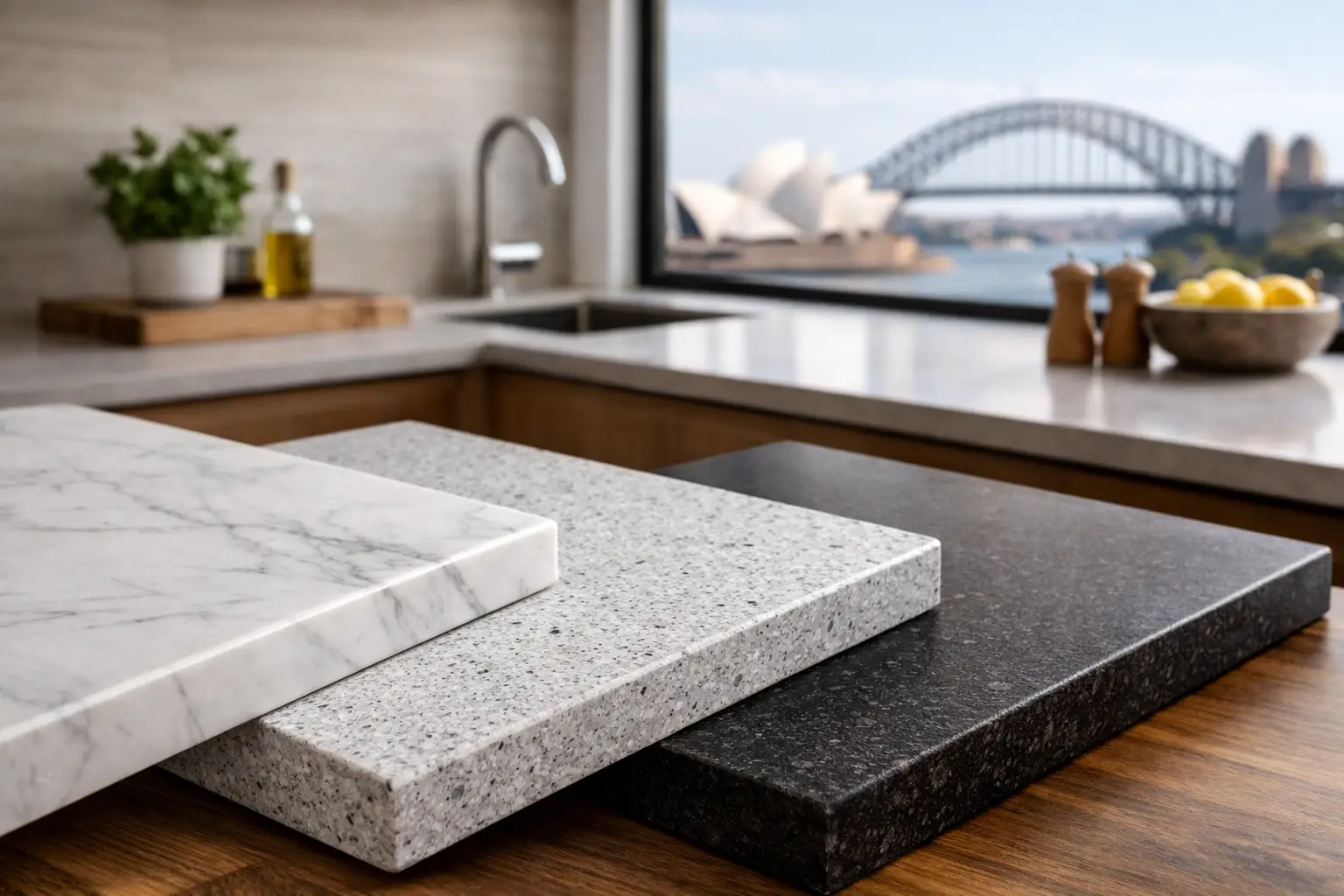
A kitchen benchtop has to handle far more than a few meal preparations. It is where school lunches are packed, groceries are unloaded, hot pans land in a hurry and family life tends to gather. The best durable kitchen benchtops are not simply the hardest surfaces available. They are the materials that suit how you cook, clean and use your kitchen, while fitting the style and budget of your renovation.
For Sydney homeowners, the right choice also needs to work with the rest of the project. Cabinet strength, sink and cooktop cut-outs, splashback selection, lighting and installation quality all affect how a benchtop performs over time. A material that looks excellent in a showroom can become frustrating if it needs more care than your household can realistically give it.
What durability really means in a kitchen benchtop
Durability is often reduced to scratch resistance, but that is only one part of the decision. A long-lasting benchtop should stand up to heat, staining, moisture, impact and daily cleaning. It also needs edges that will not easily chip, joins that are properly finished, and support below the surface that prevents movement or cracking.
The most suitable material depends on your priorities. A household that regularly cooks with heavy pots may value heat and impact resistance. A rental property may need a cost-effective surface that looks smart and is simple to replace if damaged. If a kitchen is designed around a large island, slab size and the number of joins become more important.
There is no completely maintenance-free benchtop. Even highly durable materials benefit from prompt spill clean-up, appropriate cleaning products and sensible use of trivets and chopping boards. The goal is to choose a surface whose care requirements match real life, rather than an ideal routine that will not last beyond the first busy week.
Best durable kitchen benchtops by material
Porcelain and sintered stone
Porcelain and sintered stone are leading options for homeowners who want a modern, highly resilient finish. These surfaces are manufactured under intense heat and pressure, creating a dense material with excellent resistance to heat, stains, UV exposure and everyday scratching. They are especially useful in light-filled kitchens, as they are less likely to fade than many other finishes.
They can replicate marble, concrete, timber and natural stone with a refined, consistent appearance. This makes them a practical choice when you love the look of veined marble but would prefer lower maintenance. Porcelain also works well for matching splashbacks, creating a clean and considered result.
The trade-off is that porcelain can chip along an exposed edge if it suffers a sharp impact, and installation requires careful handling by experienced trades. It is not a material to treat as a DIY fit-off. Complex cut-outs, thin profiles and waterfall ends need accurate measurement, suitable cabinetry and careful fabrication.
Natural granite
Granite remains one of the most reliable natural stone benchtop choices. It is exceptionally hard, handles heat well and brings unique movement and depth that cannot be copied exactly by a manufactured surface. For a family kitchen that needs a genuine stone feature, granite offers strength without feeling overly precious.
Its natural variation is part of its appeal, but it does mean the selected slab matters. Viewing the actual stone before finalising a colour is worthwhile, particularly where there will be a large island or prominent waterfall end. Some granites are more porous than others, so sealing is usually recommended to help protect against oil, wine and acidic food spills.
Granite is heavy and should be supported by properly constructed cabinets. It is also generally a higher-cost option once fabrication, transport and installation are included. Still, when selected and cared for properly, it can provide decades of dependable service.
Laminate
Modern laminate deserves serious consideration, especially for practical renovations with a firm budget. The range of colours, stone-look finishes, timber grains and matt textures is extensive, and a well-designed laminate benchtop can look polished without absorbing a large share of the kitchen budget.
It is easy to clean and generally copes well with normal household use. Laminate is also lighter than stone, which can simplify cabinet requirements. For investment properties, compact kitchens and families putting funds towards appliances, storage or a bathroom upgrade, it can be a sensible, durable choice.
Its limitations are clear: laminate does not tolerate direct heat, and water can cause swelling if it reaches an exposed join or damaged edge. A good installer will pay close attention around sinks, dishwashers and joins, where moisture protection matters most. Use a trivet for hot cookware and repair chips promptly to keep the surface performing well.
Solid surface
Solid-surface benchtops offer a smooth, contemporary appearance with discreet joins and the option of integrated sinks. They are non-porous, hygienic and comfortable to use, making them popular in kitchens where a clean, continuous finish is the priority.
Their strongest advantage is repairability. Minor scratches, scuffs and some stains can often be refinished rather than requiring a full replacement. This can make solid surface a practical long-term option for busy homes, particularly in softer matt finishes that hide everyday marks well.
However, solid surface is less heat-resistant and more prone to scratching than porcelain or granite. Hot pans should never be placed directly on it, and chopping boards are essential. It is best suited to owners who value a seamless look and are willing to follow a few straightforward care habits.
Timber
A timber benchtop brings warmth that stone and laminate cannot fully replicate. It can soften a contemporary kitchen, complement timber flooring or create a welcoming contrast on an island bench. Quality hardwood is strong, and small marks can often be sanded and refinished instead of becoming permanent damage.
Timber does need commitment. It requires regular oiling or resealing, prompt attention to water around sinks and care with hot cookware. It can also expand and contract with changes in temperature and humidity. For this reason, timber often works best as a feature section, such as an island or breakfast bar, paired with a lower-maintenance material in the main preparation area.
Stainless steel
For serious home cooks, stainless steel is one of the toughest working surfaces available. It is heat-resistant, non-porous, hygienic and unaffected by water. It is also a natural fit for commercial kitchens, utility areas and contemporary industrial-style homes.
Stainless steel will scratch and can dent under a hard impact, but many owners find that its surface develops an attractive lived-in patina. It is not the right choice for every kitchen style, yet it is remarkably practical where performance matters more than a flawless, untouched finish.
A note on engineered stone in Australia
Engineered stone was once a common choice because of its consistent appearance and durability. However, Australia has prohibited the manufacture, supply and installation of most engineered stone benchtops from 1 July 2024 due to the serious health risks associated with respirable silica dust during fabrication.
If you are planning a new kitchen, it is wise to discuss compliant alternatives with your renovation team from the outset. Porcelain, sintered stone, natural granite, laminate, timber and solid surface can all deliver excellent results when selected for the right application. Existing engineered stone surfaces do not automatically need to be removed, but any future alteration or removal should be handled with appropriate safety controls.
Choosing the right surface for your household
Start with the way your kitchen is actually used. If you want high heat resistance and minimal day-to-day concern, porcelain or granite may be worth the investment. If you need a hard-wearing result within a tighter budget, quality laminate with well-sealed joins is often the better decision. For an integrated, contemporary look that can be repaired over time, solid surface is worth considering.
Also think beyond the flat surface. A square edge can look sharp but may be more vulnerable to knocks than a softly eased profile. Deep drawer cabinets, appliance housings and large overhangs need to be designed to support the benchtop material. A thin porcelain slab and a thick granite slab place very different demands on the cabinetry below.
At RADZ Renovations, benchtop selection is considered alongside cabinet layout, plumbing locations, electrical requirements and final finishes. This coordinated approach helps prevent late changes that can add cost or compromise the result. For Bankstown and Sydney renovation projects, accurate site measurement before fabrication is especially important in older homes where walls and floors are not always perfectly square.
Care habits that protect your investment
Simple daily habits make a noticeable difference. Wipe spills promptly, particularly oil, wine, citrus and strongly coloured foods. Use a chopping board rather than cutting directly on any benchtop, and place hot pots on trivets even where a surface is rated for heat. Avoid abrasive scourers and harsh chemicals unless they are confirmed as suitable for your specific material.
Natural stone and timber need the most proactive care, including periodic resealing or oiling. For laminate, inspect the area around the sink and dishwasher from time to time, as catching a failed seal early can prevent water damage to both the benchtop and cabinetry. With porcelain, protect exposed edges from sharp impacts when moving heavy cookware or appliances.
A well-chosen benchtop should make everyday kitchen life easier, not give you another surface to worry about. Choose the material that suits your habits, allow for proper installation, and it will continue to look and perform well long after the renovation is complete.