

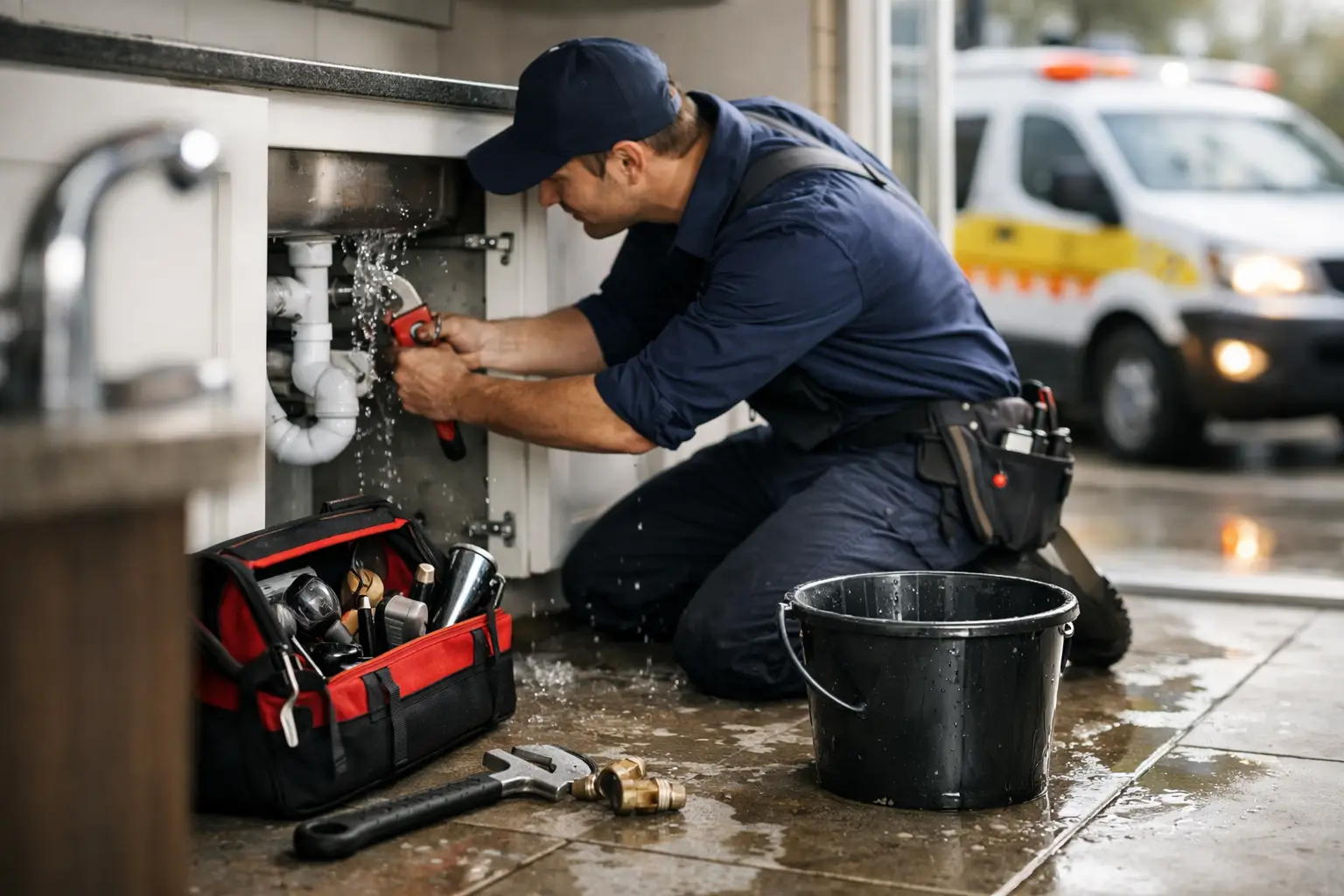
A burst flexi hose under the vanity can turn a quiet evening into a soaked bathroom floor within minutes. When you need emergency plumbing repairs Sydney property owners should focus on two things first: making the area safe and limiting water damage. Quick action can protect cabinetry, flooring, walls and the rooms below, but a lasting repair still needs the right diagnosis and licensed workmanship.
What counts as a plumbing emergency?
Not every drip requires an after-hours callout. A tap that slowly leaks into a basin can often wait for a scheduled repair, provided it is not wasting large amounts of water or damaging the cabinet beneath it. An emergency is a plumbing fault that creates an immediate safety risk, threatens significant property damage, affects sanitation, or leaves the property without an essential service.
A major leak, burst pipe, overflowing toilet that will not stop, sewage backup, hot-water failure during cold weather, or a blocked drain causing wastewater to rise inside are all situations that deserve prompt attention. Water near power points, appliances or exposed wiring raises the urgency further. Do not attempt to work around electrical hazards – keep clear of the area and seek qualified help.
For landlords and commercial property owners, the threshold may be lower. A leaking pipe in a vacant tenancy, a blocked toilet in a workplace or water entering a shared corridor can quickly become a safety, hygiene and liability issue. Acting early is usually less disruptive than repairing damaged finishes after the fact.
The first 15 minutes can reduce the damage
The immediate response is not about finding the perfect fix. It is about stopping the flow, protecting people and giving the plumber a clearer, safer site to work on.
Shut off the water source
If the leak is isolated to a toilet, basin, washing machine or dishwasher, look for the small isolation valve on the water line leading to that fixture. Turn it clockwise if it is safe and accessible. If you cannot identify the source or the leak continues, turn off the property’s main water supply.
Many Sydney homes have the main stop valve near the water meter, often at the front boundary. Apartments can be different, with an isolation valve inside the unit or in a common services area. It is worth locating yours before an emergency occurs, particularly after moving into a new property or completing a renovation.
Do not force a stiff valve. Older fittings can fail when put under pressure, making the situation worse. If it will not move easily, contain the water as best you can and tell the plumber what has happened.
Keep water away from electricity
Switch off power at the main board only if you can reach it without stepping through water or touching wet surfaces. Never handle electrical equipment, power boards or appliances that may have been exposed to water. Move people, pets and loose items away from the affected space.
If water is coming through a ceiling, avoid puncturing it unless advised by a qualified professional. A bulging ceiling may be holding a substantial amount of water, and releasing it without controlling the area can cause injury or spread damage. Keep the room clear and arrange help promptly.
Contain, document and ventilate
Use towels, buckets and shallow trays to catch and direct water where possible. Lift rugs, boxes, furniture and stored belongings away from the wet area. If it is safe, take a few photos before extensive clean-up begins. They can help show the cause and extent of the damage for strata managers, insurers or landlords.
Once the leak is isolated, open windows and use ventilation to reduce moisture. This does not replace professional drying where water has reached wall cavities, carpet, timber flooring or cabinetry, but it can slow the onset of mould and musty odours.
What not to do during an urgent plumbing fault
DIY repair videos can make emergency work look straightforward, but the wrong temporary fix can conceal a problem, damage pipework or create a bigger leak later. Avoid using strong chemical drain cleaners in a severely blocked drain. They can damage some pipes, create fumes and make the work more hazardous for the plumber attending the blockage.
Do not keep flushing an overflowing toilet in the hope that it will clear. Shut off the toilet’s water supply if you can, avoid using nearby fixtures that may feed the same blockage, and keep the bathroom closed off. Likewise, do not tape over a pressurised pipe and assume it is secure. Tape may reduce a minor drip briefly, but it is not a repair for a split pipe, failed joint or burst hose.
It is also sensible to avoid pulling apart concealed plumbing in walls, floors or vanity units. Aside from the risk of more water damage, plumbing work must meet relevant Australian standards and local requirements. Proper repairs protect the property, its occupants and future renovation work.
What a qualified plumber needs to assess
A reliable repair is more than replacing the visible part that has failed. The plumber will need to find the source, assess how far water has travelled and check whether there is an underlying issue that could cause a repeat failure.
With a burst flexi hose, for example, the immediate repair may be relatively contained. But the cabinet base, plasterboard, flooring and adjoining rooms may still need inspection. With a recurring blocked drain, the problem could be a local obstruction, damaged pipework, tree roots or an issue further along the line. The right remedy depends on the cause.
When you call, give clear information: where the water is appearing, whether the main supply has been isolated, which fixtures are affected, whether sewerage is involved and whether there are electrical concerns. Photos can be useful, but do not delay urgent action to take them. Ask what the attendance involves, whether further investigation may be required, and how the area should be left safe if additional drying or repair work is needed.
Emergency plumbing repairs Sydney homes may need after the leak stops
The visible plumbing repair is only one part of recovery when water has spread. Damp materials can deteriorate quietly behind a wall or under a floor. Cabinetry may swell, plasterboard can soften, paint may blister and timber flooring can cup or lift. A controlled repair plan helps avoid cosmetic work being completed before the affected structure is dry and sound.
This is where coordination matters. A bathroom leak may require plumbing repairs followed by safe removal of damaged lining, plasterboard repairs, waterproofing checks, tiling and repainting. A kitchen leak may affect cupboards, kickboards, flooring and electrical services. Using trades who can communicate across the work helps keep the scope clear and reduces the risk of one repair undoing another.
RADZ Renovations can assist property owners when urgent plumbing damage leads into practical repair, restoration or a more considered bathroom and kitchen upgrade. The priority should always be to make the property safe, identify the cause and restore affected finishes in the right order rather than rushing straight to surface-level repairs.
Prevention is simpler than an emergency callout
Most plumbing emergencies cannot be predicted, but regular checks reduce avoidable risks. Look inside sink and vanity cabinets every few months for damp patches, corrosion, swollen boards or a musty smell. Check washing machine and dishwasher hoses for cracking, bulging or wear, and replace ageing flexible hoses before they fail.
Keep fats, coffee grounds, wipes and bulky food scraps out of drains. Even products labelled flushable can contribute to blockages. If a drain starts gurgling, empties slowly or produces persistent odours, arrange an assessment before it becomes a backup inside the property.
After any renovation, keep a record of isolation valve locations, appliance warranties and the trades who completed the work. Knowing who to call and how to shut off the water can turn a stressful incident into a manageable repair.
A plumbing emergency is disruptive, but it does not have to become a full-scale property disaster. Stay calm, isolate the water where safe, protect the affected area and arrange qualified help. Careful follow-up on drying and damaged finishes will give your home or commercial space the best chance of returning to normal without hidden problems later.