

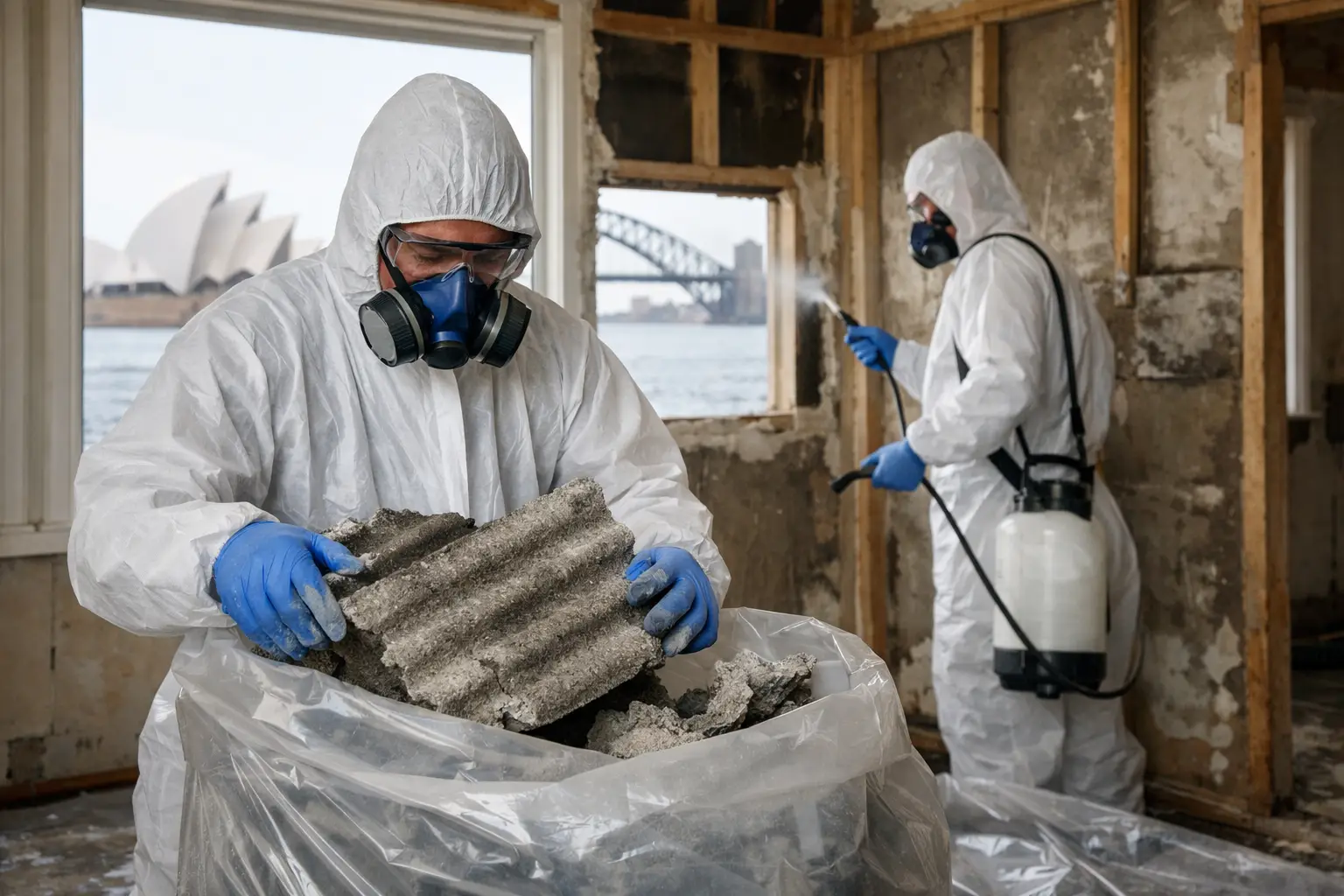
A bathroom wall comes down, old vinyl flooring is lifted, or an eave is opened for repairs – and suddenly the renovation is no longer just about finishes and layouts. Asbestos removal may need to happen before any other work can safely proceed. For Sydney homes and commercial properties built or renovated before the mid-1980s, this is a realistic possibility, not an obscure concern.
The right response is not to panic or start pulling materials apart to find out. Stop work in the affected area, avoid disturbing the material, and arrange a professional assessment. A clear plan at this stage protects the people on site, helps meet NSW requirements and keeps the rest of the project moving with fewer costly surprises.
Where asbestos may be hiding in older properties
Asbestos was widely used in Australian building products because it was durable, heat resistant and affordable. It can appear in more places than homeowners expect, particularly where a property has had additions, repairs or partial renovations over several decades.
Common locations include fibre-cement wall and ceiling sheeting, bathroom and laundry linings, eaves, soffits, garage walls, roof sheeting, fencing and backing boards. It may also be present in older vinyl floor tiles, vinyl sheet flooring and the adhesive underneath, as well as electrical meter boards, flue pipes and textured coatings.
Appearance alone is not a reliable test. Some asbestos-containing materials look similar to modern fibre cement, while layers of paint, tiles or newer cladding can hide what sits beneath. Age is a useful clue, but it is not confirmation. Laboratory testing of a properly collected sample is the dependable way to identify suspect material.
The condition of the material matters too. Bonded asbestos, often found in cement sheeting, is less likely to release fibres when it is sound, sealed and left undisturbed. Friable asbestos can be crumbled by hand pressure and carries a higher risk because fibres can become airborne more easily. Drilling, sanding, cutting, breaking or using high-pressure water on either type can turn a manageable issue into a serious site safety problem.
When asbestos removal is necessary
Not every asbestos-containing product must be removed immediately. If it is intact, in good condition and unlikely to be disturbed, managing it in place may sometimes be the sensible option. This can be relevant for a section of external cladding or an eave that is not part of the planned works.
Removal becomes necessary when the material is damaged, deteriorating, being altered, or sits within the renovation area. A simple kitchen update can affect asbestos linings behind cabinetry. Replacing a bathroom exhaust fan may involve a ceiling panel. New plumbing, electrical work, windows or doors can all require penetrations through materials that need to be checked first.
For landlords and commercial property owners, the decision should also consider future maintenance. Leaving known asbestos in a hard-to-access location may save money at the start, but create more disruption when repairs are needed later. The practical choice depends on the material’s condition, its location, the scope of planned work and how the space will be used.
Asbestos removal in NSW: licensing and safety
NSW has specific rules for asbestos work. Friable asbestos removal requires a Class A asbestos removal licence. For bonded, non-friable asbestos, a Class B licence is generally required where more than 10 square metres is being removed. Smaller bonded asbestos jobs may be carried out by a competent person, but that does not mean they are suitable for an unprepared homeowner or a general handyman.
A professional removal team should assess the material and scope before work begins, then select the right controls for the job. Depending on the situation, this can include isolating the work zone, using appropriate protective equipment, wet methods to reduce dust, controlled removal techniques and safe packaging of waste.
The aim is not merely to take sheets or tiles away. It is to prevent asbestos fibres from being released while the material is handled, cleaned up and transported. Dry sweeping, standard household vacuuming and breaking material into smaller pieces are unsafe practices and should never be used.
Once removal is complete, asbestos waste must be transported and disposed of at an approved facility. It cannot go into a household rubbish bin, skip bin or general construction waste load. For higher-risk work, clearance processes may also be required before trades return to the area. Your contractor should explain what applies to your property rather than treating every job as identical.
What to expect from a well-managed removal process
Good asbestos management starts before demolition day. A contractor should ask about the building age, previous renovations, affected rooms and the work you intend to complete. Where materials are unknown or suspect, testing and assessment should be arranged before a fixed renovation schedule is locked in.
After the scope is confirmed, the work area is planned around access, resident safety and the surrounding property. This is especially important in occupied homes, apartment buildings and businesses that need to remain partly operational. You may need to keep family members, pets, tenants or staff away from the work zone while removal is underway.
The removal itself should be carefully contained and completed before carpentry, plumbing, electrical, tiling or painting begins. Trying to overlap these activities creates unnecessary risk and makes site control more difficult. A coordinated renovation contractor can sequence the trades so the project restarts promptly after the area is confirmed safe.
Documentation is worth asking about. Keep test results, removal records, waste disposal details and any clearance documentation with your property files. These records provide useful evidence of what was found and how it was handled, particularly if you sell, lease or renovate the property again.
Planning for cost without cutting corners
Asbestos removal costs vary because no two sites are the same. The amount and type of material, its condition, access to the area, whether it is internal or external, testing requirements, containment measures, disposal fees and clearance needs all affect the quote.
A small accessible section of bonded sheeting is very different from asbestos beneath several layers of bathroom finishes or flooring adhesive across multiple rooms. Urgent work, difficult roof access and occupied commercial premises can also require extra planning.
The lowest quote is not automatically the best value. Make sure you understand what is included: assessment, labour, protective measures, packaging, transport, disposal, cleaning, any required clearance and restoration work afterwards. An unclear quote can leave owners paying separately for items they assumed were covered.
It is also wise to allow a contingency in an older-property renovation budget. Even careful pre-planning cannot always reveal hidden materials behind walls, under floors or above ceilings. A realistic allowance gives you room to make safe decisions without derailing the entire project.
How homeowners can reduce disruption
Before work starts, remove personal belongings from nearby rooms where possible and make clear access available to the work area. Tell the contractor about children, pets, tenants, shared driveways, restricted parking or business operating hours so the site plan can account for them.
Do not attempt to inspect a suspicious surface by scraping, drilling or lifting it yourself. Take clear photos from a safe distance if requested, note the building age and location, then wait for professional advice. If a material is accidentally damaged, keep people away, avoid creating airflow through the area and contact a qualified provider promptly.
For renovations involving several trades, early asbestos checks are one of the best ways to protect your timeline. RADZ Renovations can help coordinate the removal stage within a broader renovation plan, so the right safety steps are completed before your new space takes shape.
A well-finished renovation begins with a safe, clean foundation. Addressing suspect asbestos early gives you clearer costs, better scheduling and confidence that the work ahead can be completed properly.